- Founded
- 1882, London
- First president
- Henry Sidgwick
- Key early work
- Phantasms of the Living (1886)
- Still active
- Yes — publishes a journal and proceedings
Historical source
Origins in a Victorian age of séances
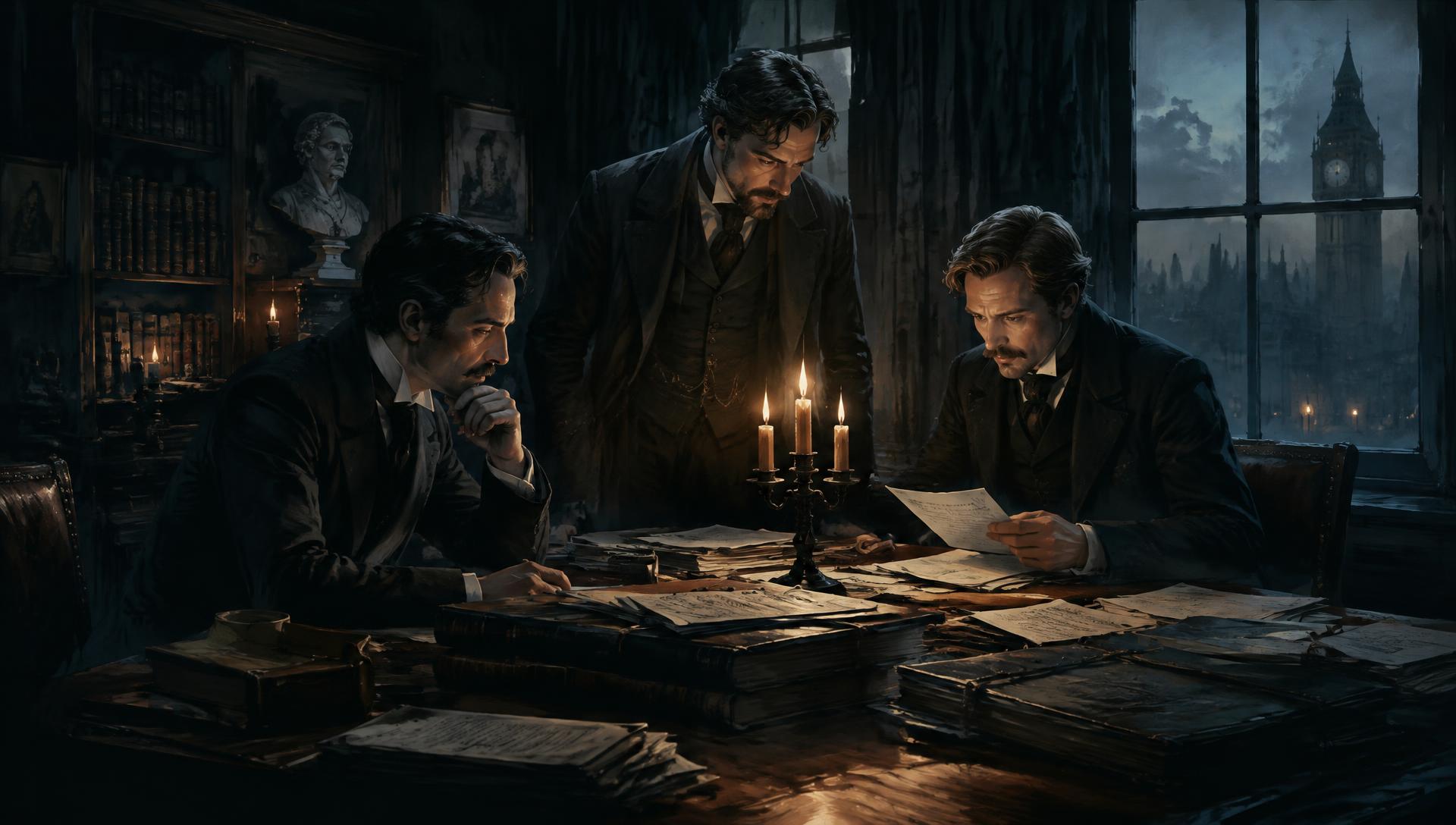
By the 1870s, séances, table-turning and spirit mediums were fashionable across Britain. Many educated Victorians, unsettled by scientific challenges to religious belief, wanted to know whether any of it could be tested. In 1882 a group of Cambridge scholars and spiritualists came together to form the SPR, among them the philosopher Henry Sidgwick, the classicist Frederic W. H. Myers, Edmund Gurney and the physicist William Barrett.
Their stated aim was to examine 'without prejudice or prepossession' the faculties of the mind that appeared to be inexplicable, including reports of ghosts, telepathy and communication with the dead.
Collecting the testimony of the living
The Society's early work was built on correspondence. In 1886 Gurney, Myers and Frank Podmore published Phantasms of the Living, a two-volume study of hundreds of cases in which people reported seeing or sensing a loved one at the moment of that person's death or crisis.
Between 1889 and 1894 the SPR ran its 'Census of Hallucinations', asking thousands of members of the public whether they had ever seen, heard or felt a presence that was not physically there. The results suggested such experiences were far more common than people admitted, a finding still discussed by researchers of bereavement today.
Exposures, disputes and scepticism
The SPR became known as much for debunking as for belief. Its 1885 Hodgson Report criticised claims made by the founder of the Theosophical movement, and many celebrated mediums failed its tests. Over the decades, prominent members, including William James and later Arthur Conan Doyle, held very different views; Conan Doyle resigned in 1930, believing the Society had become too hostile to spiritualism.
Why it matters to investigators
Much of modern ghost hunting — witness interviews, written statements taken soon after an event, and careful notes on conditions — echoes methods the SPR developed. Its archive, held at Cambridge University Library, remains one of the richest collections of reported encounters with the dead.
Further reading
- — Phantasms of the Living (Gurney, Myers & Podmore, 1886)
- — SPR archive, Cambridge University Library
Historical summaries are provided for education. Reported experiences are not automatically presented as verified paranormal events.
More on psychical research
Victorian Spirit Photography →