- Born
- 1897, Callander, Scotland
- Trial
- Old Bailey, 1944
- Sentence
- Nine months' imprisonment
- Act repealed
- 1951 — Fraudulent Mediums Act
Historical source
A medium of materialisations
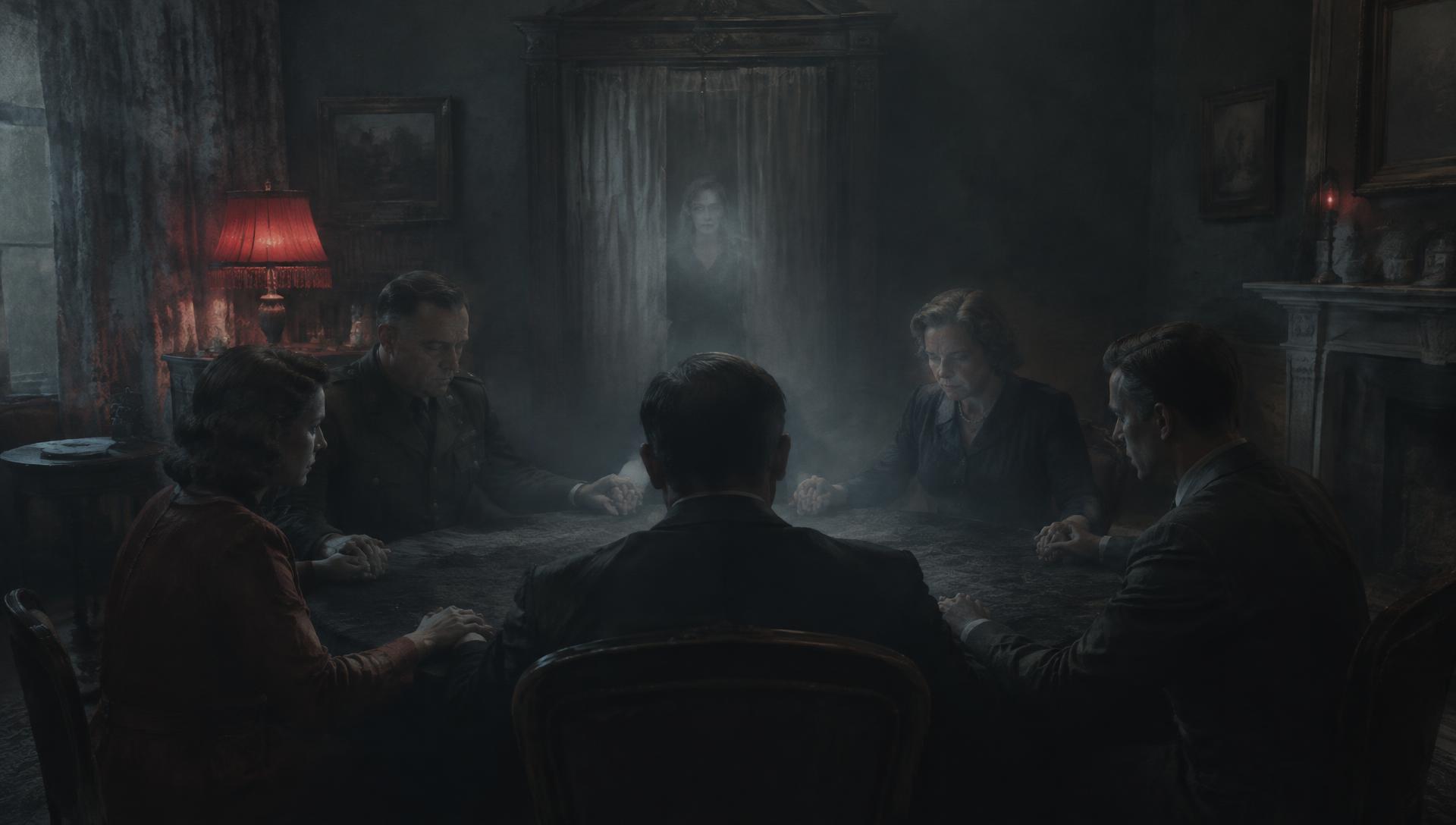
Helen Duncan was known for séances in which she appeared to produce 'ectoplasm' and the forms of the dead. In 1931 the investigator Harry Price examined her and concluded that the substance was cheesecloth, which he believed she swallowed and regurgitated.
The sailor and the sunken ship
In late 1941 Duncan was reported to have held a séance in Portsmouth where a dead sailor from HMS Barham appeared — at a time when the ship's sinking had not yet been made public. Whether the information came from the spirit world, rumour or bereaved families remains debated.
In January 1944 she was arrested at a séance. Authorities, anxious about wartime secrecy and fraud against grieving families, charged her under the 1735 Witchcraft Act, which punished pretending to summon spirits.
Repeal and legacy
Her conviction was widely criticised; Winston Churchill reportedly called the use of the Act 'obsolete tomfoolery'. In 1951 the Witchcraft Act was replaced by the Fraudulent Mediums Act. Campaigners have since sought a posthumous pardon for Duncan, so far without success.
Further reading
- — Hellish Nell: Last of Britain's Witches (Malcolm Gaskill, 2001)
Historical summaries are provided for education. Reported experiences are not automatically presented as verified paranormal events.
More on psychical research
Residual Hauntings →