- Origin of the term
- French séance — 'a sitting'
- Peak era
- 1850s–1920s
- Investigations
- SPR (1882); Seybert Commission (1884–87)
- Documented fraud
- Extensive, across many celebrated mediums
Historical source
The theatre of the darkened room
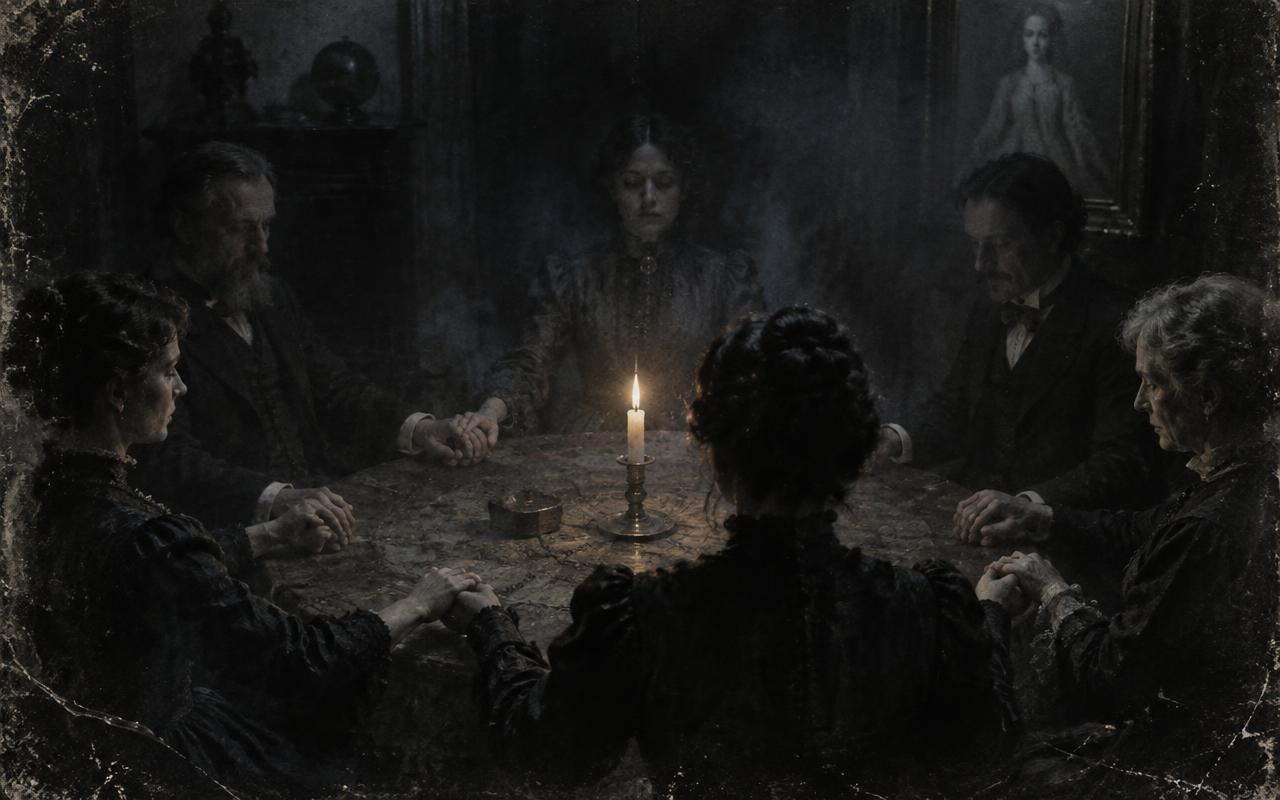
A classic Victorian séance had a fixed grammar: the lights lowered, the sitters joining hands around a table, and a medium through whom the dead were said to speak — by raps, by tilting tables, by trumpet voices, and in the most dramatic cases by full materialisations. Table-turning became a fashionable parlour game before it became a subject of research.
The motivation deserves respect before the criticism begins. After a century of high mortality, millions of grieving families paid mediums not for proof but for one more word from someone they loved. That longing built an industry — and attracted people ready to exploit it.
The investigators
Sceptical and sympathetic investigators alike tested the phenomena. The University of Pennsylvania's Seybert Commission examined table-turning and materialisation in the 1880s and found trickery. The Society for Psychical Research, founded in 1882, brought systematic record-keeping to mediumship — and its history is one of celebrated mediums failing tests as often as impressing them.
Some frauds became famous in their own right: mediums caught moving tables with their feet, producing 'spirit hands' from cheesecloth, or hiring accomplices. Magicians such as Harry Houdini devoted the later years of his life to exposing them, having learnt the tricks from his own trade.
What remains
Mediumship survives today in mental forms — claimed messages and impressions rather than materialisations — and remains a living practice for many. Its evidential claims have never passed controlled tests in a way the scientific community accepts.
We record the history of the séance as cultural history: a movement that shaped grief, theatre, religion and science all at once. The séance image on this page is an illustration of that history, not a record of an investigation.
Further reading
- — The Seybert Commission report (1884–87)
- — The SPR's early reports on mediumship
Historical summaries are provided for education. Reported experiences are not automatically presented as verified paranormal events.
More on spirit communication
Automatic Writing →