- Early study
- Sir William Barrett, Death-Bed Visions (1926)
- Survey
- Osis & Haraldsson, At the Hour of Death (1977)
- Modern research
- Hospice studies, Buffalo NY (2010s)
- Typical figure
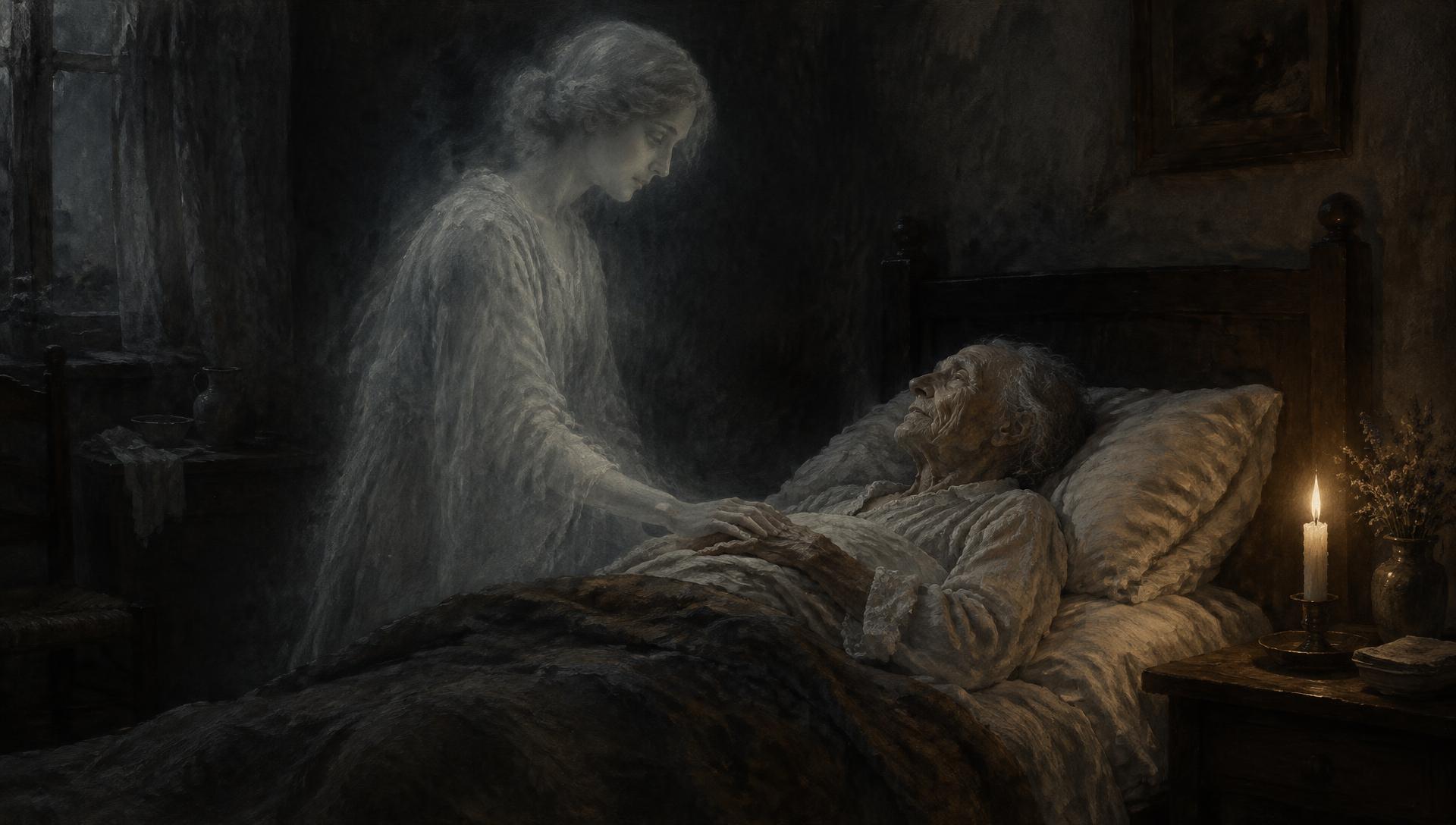
- A deceased relative 'come to collect'
Research
The physicist who listened
Sir William Barrett, a physicist and SPR co-founder, became interested after his wife, an obstetric surgeon, described a dying patient who saw her late father — and also a sister whose recent death had been kept from her. His book Death-Bed Visions was published in 1926, the year after his own death.
Surveys of doctors and nurses
In the 1960s and 1970s Karlis Osis and Erlendur Haraldsson surveyed over a thousand doctors and nurses in the United States and India. Published as At the Hour of Death (1977), their work found that the dying most often reported seeing deceased relatives who appeared to have come to take them away.
More recently, hospice physicians in Buffalo, New York, interviewed patients directly and found that most reported dreams or visions near the end of life, frequently of family members, and that these were usually experienced as comforting rather than frightening.
Interpreting with care
Illness, medication, reduced oxygen and delirium can all affect perception, and families understandably read profound meaning into a loved one's final words. Palliative-care guidance increasingly recommends listening to these experiences rather than dismissing them. We record them with the same respect: as part of how people meet death, not as evidence to be argued over a bedside.
Further reading
- — Death-Bed Visions (Sir William Barrett, 1926)
- — At the Hour of Death (Osis & Haraldsson, 1977)
Historical summaries are provided for education. Reported experiences are not automatically presented as verified paranormal events.
More on the afterlife
Burial & Mourning Traditions →