- Term popularised
- Raymond Moody, Life After Life (1975)
- Measurement
- Greyson NDE Scale (1983)
- Major study
- van Lommel et al., The Lancet (2001)
- Status
- Causes debated
Research
Accounts before the name
Stories of travelling toward the light and returning appear in many cultures. In 1892 the Swiss geologist Albert Heim published accounts from climbers who survived serious falls and described time slowing, a life review and calm acceptance. In 1975 the psychiatrist Raymond Moody collected similar testimonies in Life After Life and gave the experience its modern name.
What people report
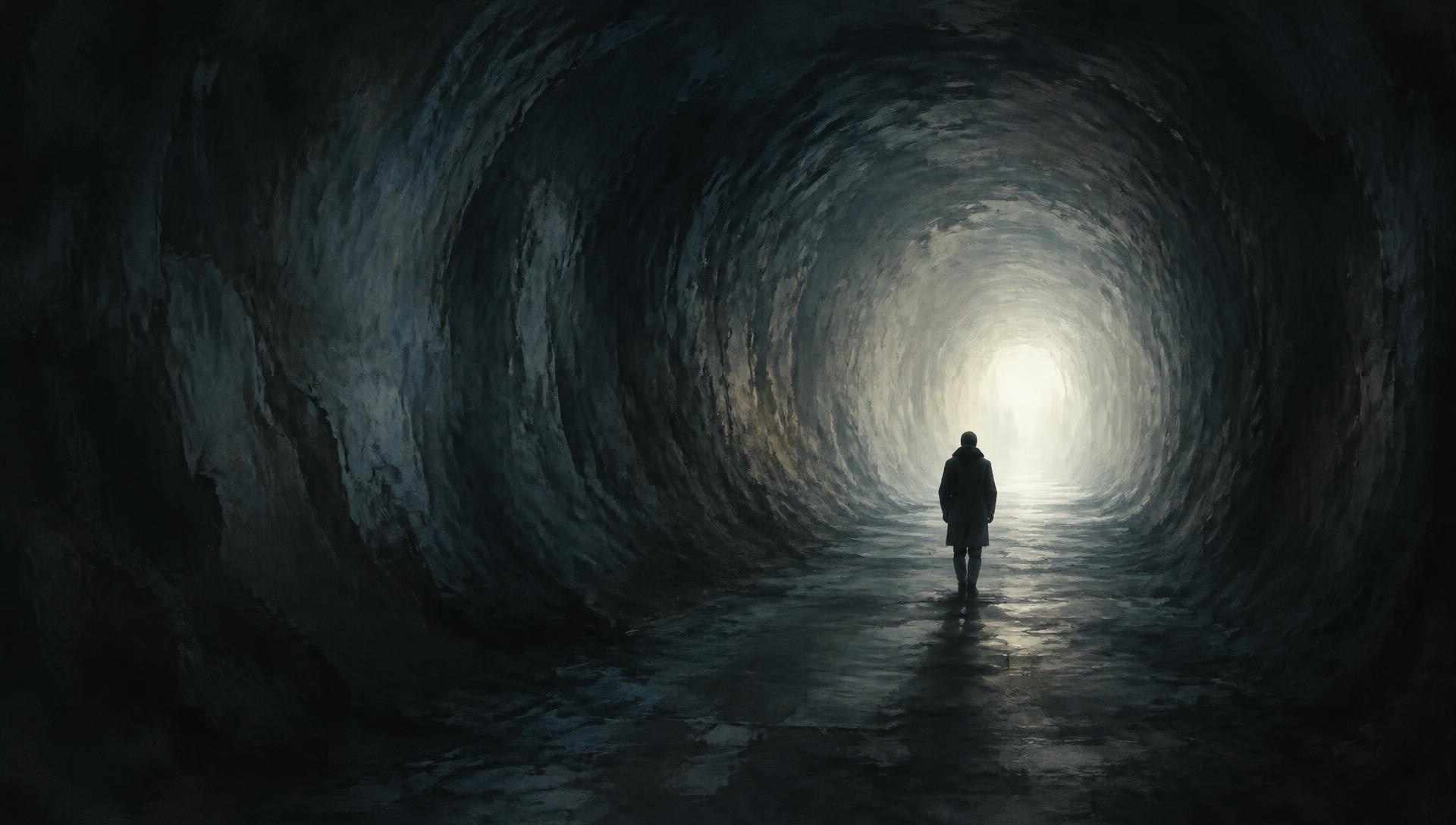
Common elements include feeling dead, seeing one's own body from above, moving through darkness or a tunnel, an intense light, encountering deceased relatives, a review of one's life and a reluctant return. Many experiencers describe lasting changes afterwards: less fear of death and a greater sense of meaning.
In 1983 the psychiatrist Bruce Greyson created a scale for assessing these experiences, which is still used in research.
The scientific debate
A 2001 Dutch study published in The Lancet followed 344 cardiac-arrest survivors and found that around 18% reported some form of NDE. Later projects, including the AWARE studies led by Sam Parnia, tried to test claims of out-of-body perception in hospitals.
Proposed explanations include reduced oxygen, surges of brain activity near death, REM-sleep intrusion and the effects of medication. Others argue these do not fully account for the clarity of the memories. The question remains open, and we present accounts as testimony rather than proof.
Further reading
- — Life After Life (Raymond Moody, 1975)
- — van Lommel et al., The Lancet, 2001
Historical summaries are provided for education. Reported experiences are not automatically presented as verified paranormal events.
More on the afterlife
Deathbed Visions →