- Focus
- Burial grounds & remembrance
- Common stories
- Watchful figures, lights, footsteps
- Etiquette
- Opening hours; never disturb graves
- Status
- Folklore & local tradition
Folklore
Behind every gravestone lies a story
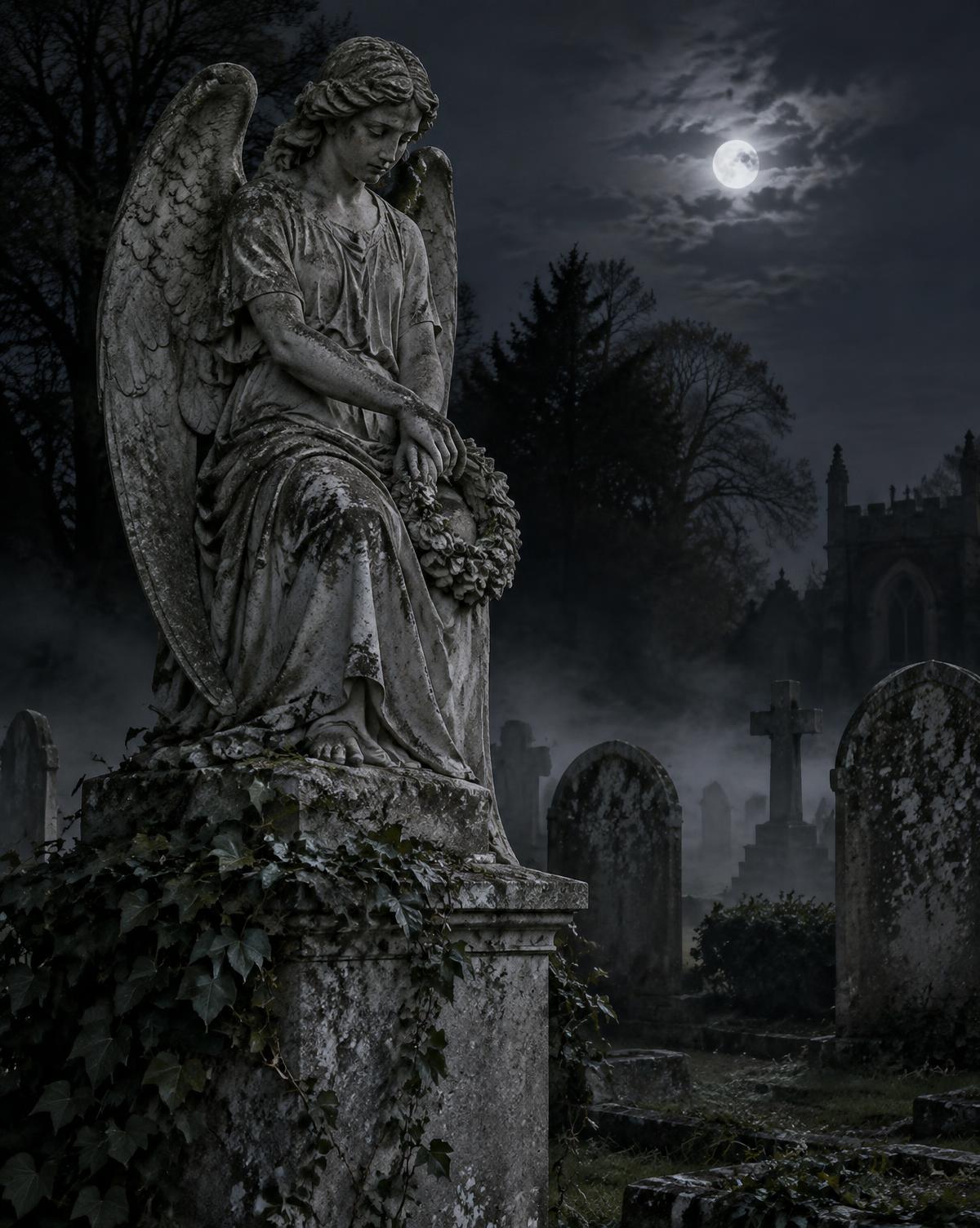
Memorial angels, weathered inscriptions and forgotten paths preserve traces of people whose lives deserve respect. Before a cemetery is a haunting, it is a record: of families, epidemics, tragedies and quiet ordinary lives, cut into stone by neighbours who wanted the dead to be remembered.
Many of the best-known cemetery stories began as warnings or comfort. Some marked real dangers — unstable ground, drowned quarry ponds, footpads on the old paths. Others grew around specific graves because a family kept returning, and the returning became part of the story.
The folklore of the gates
Oral tradition frequently gives burial grounds a watchful figure, a light among the headstones or footsteps heard after the gates have closed. In some traditions a churchyard held the oldest, most restless dead; in others it was the safest ground of all, protected by consecration. The variations tell us about the communities, not about the ground.
Some goodbyes are never the end — that belief is at the heart of nearly every cemetery story, and it deserves to be read with the same respect as the memorials themselves.
Visiting with respect
Any visit must follow opening hours and local rules. Never disturb graves, remove objects or enter a closed site without permission. Photography of memorials should be respectful, and any burial ground that remains in active use deserves particular care: mourners are not part of the folklore.
We record cemetery traditions as local history and treat the grounds as what they are — places where the living still grieve. The memorial imagery on this site is an illustration, not evidence.
Further reading
- — Local graveyard surveys and county records
- — Highgate Cemetery Trust archives
Historical summaries are provided for education. Reported experiences are not automatically presented as verified paranormal events.
More on remembrance
Witches →