The Face Within the Mausoleum
Some things are easier to photograph than they are to explain.
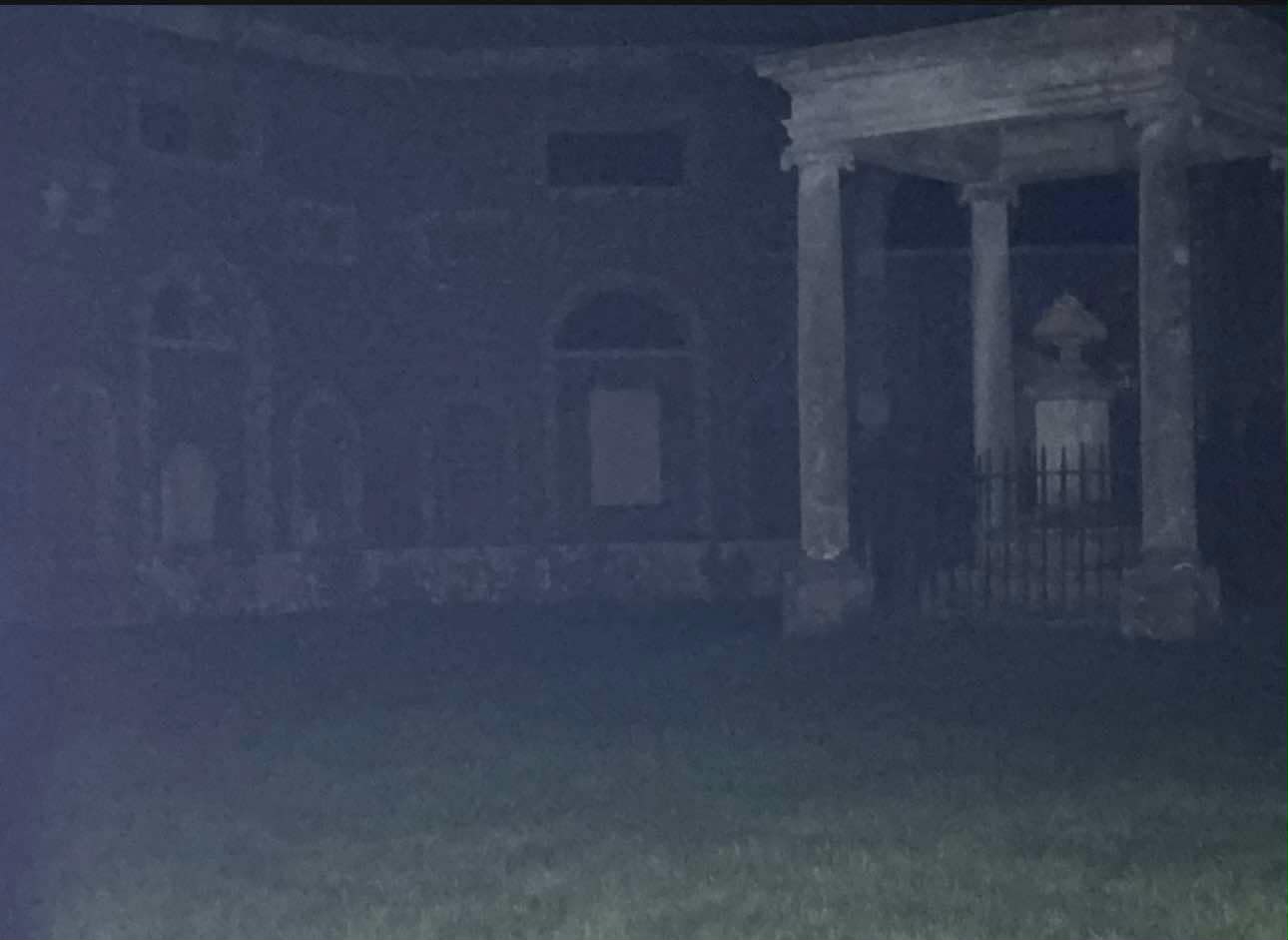
During a visit to the historic Dashwood Mausoleum at West Wycombe in 2024, an unusual feature was captured in a photograph taken by the team.
At first glance, the image appears to show the familiar architecture of the mausoleum: its imposing columns, darkened arches and iron railings. But on closer inspection, something else attracts attention.
Behind the railings, towards the right-hand side of the photograph, there appears to be a pale formation resembling a human face.
The shape seems to have a recognisable outline, with what could be interpreted as facial features. It appears to occupy the darkness between the columns, creating the impression that something is looking out from within the structure.
Was it simply an architectural feature caught in an unusual light, or could there be another explanation?
A place with a remarkable past
The Dashwood Mausoleum was built between 1763 and 1765 by Sir Francis Dashwood. It stands on West Wycombe Hill and was constructed to house the memorials and funeral urns of the Dashwood family and their associates.
The building is Grade I listed and is particularly striking for its classical columns, open arches and unusual roofless design.
Its history is closely connected with Sir Francis Dashwood, one of the most controversial figures of eighteenth-century England and the founder of a notorious private gentlemen's club.
The surrounding landscape has an even older history, with evidence of an Iron Age hillfort on West Wycombe Hill.
The story of the missing heart
Perhaps the most intriguing story associated with the mausoleum concerns Paul Whitehead, poet and steward of Dashwood's club.
When Whitehead died in 1774, he left instructions for his heart to be preserved in a marble urn and placed within the mausoleum.
His wishes were carried out, and the heart became an unusual attraction for visitors.
According to the historical account published by the caves at West Wycombe, the heart was eventually stolen in 1829. It has never been recovered.
Over time, a local legend developed that Whitehead's spirit continued to wander the area, searching for the heart that had been taken from its resting place.
Whether this story has any paranormal basis remains unknown, but it gives the mausoleum a particularly unusual connection with the unexplained.
What did the camera capture?
The apparent face is positioned behind the iron railings, between the columns on the right-hand side of the photograph.
It appears noticeably lighter than the surrounding darkness and seems to have a head-like outline.
There are several possible explanations.
The shape could be a memorial feature or stone ornament within the building. The combination of darkness, architectural detail and uneven lighting could also have created an optical illusion.
Low-light photography can introduce digital noise, compression artefacts and unusual contrasts, sometimes making indistinct shapes appear more defined.
One possibility is pareidolia, where the human brain recognises familiar patterns, particularly faces, in otherwise ambiguous shapes.
However, the original photograph does not provide enough detail to identify the object conclusively.
Could there be a paranormal connection?
For those who investigate the unexplained, the location makes this photograph particularly interesting.
The mausoleum was built as a resting place and memorial to the dead. Its history includes family memorials, funeral urns and the extraordinary story of Paul Whitehead's preserved heart.
Paranormal folklore sometimes associates historic burial places with lingering presences, emotional attachments and spirits connected to their former resting places.
Could the apparent face be connected to one of the people remembered within these walls?
Could it have any connection with the story of Paul Whitehead?
Or is it simply an unusual interaction of light, architecture and the camera?
At present, we cannot answer those questions.
The TTE conclusion
We are not presenting this photograph as definitive proof of a ghost or spirit.
What makes it interesting is the location, the history behind it and the unusual face-like formation visible within the original image.
The story of the missing heart adds another fascinating layer to an already remarkable place, but we have no evidence identifying the formation as Paul Whitehead or any other individual.
For Time Travel Encounters, this remains an intriguing photograph from a location steeped in history and folklore.
Sometimes the most interesting evidence is not the evidence that provides an answer, but the image that leaves us asking more questions.
The living. The dead. The unexplained.
Some goodbyes are never the end.